Pages

March 21, 2013

BUSH TOMATO + money & bank card


Word for the Day Our Earth
Our earth is a treasure
whose worth we can't measure

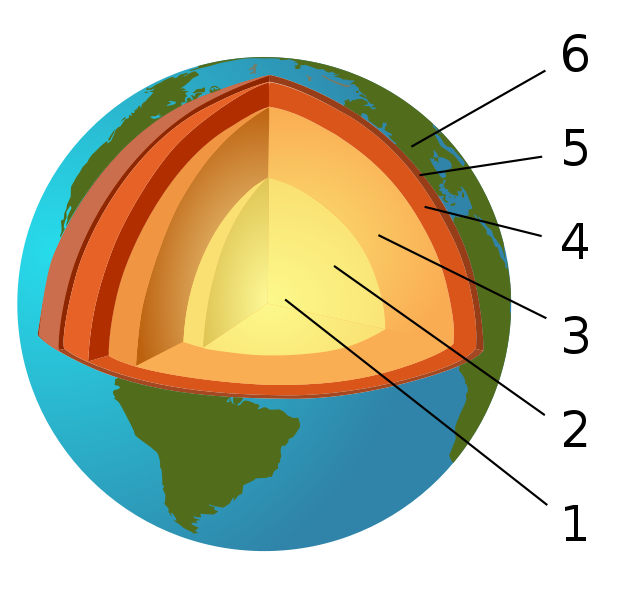
The Earth's layered structure. (1) inner core; (2) outer core; (3) lower mantle; (4) upper mantle; (5) lithosphere; (6) crust

http://en.wikipedia.org/wiki/Geology


Home Packing a Survival Bag: Money & Bank Card
In my Survival Bag, I have already packed 
1. my emergency foil blanket, plus silk sheet-bag and a sleeping bag. 
2. a mosquito head net and a tube aloe vera
3. my clothing
4. my food and my drink bottles
5. my first aid kit
6. eating and cooking utensils
7. my Tommy Cooker Hexi Stove and fuel tablets
8. Windproof and Waterproof Matches (or a fire flint or cigarette lighter)
9. my torches
10. my washbag 
11. soap for washing dishes and clothes
12. whistle & glowstick 
13. camera, MP3player and mobile phone
14. printed Important Information

Today I will pack some money and a bank card
*I will put an appropriate amount of money in my emergency bag.

*I will pack a credit card kept specifically for emergency. 
I have only used this card a few times, so check periodically to make sure that it still works as sometimes banks close accounts which have not been used for a couple of years. This card has a high rate of interest as soon as something is bought, but the card has no fees. I have put $100 on the card to prevent being charged interest on a purchase and have set the limit to $200) 
A debit-visa card could be useful, but it is hard to find one that has no fees. 


Garden Bush Tomato  Australian Bush Tucker

The term bush tomato refers to the fruit or entire plants of certain nightshade (Solanum) species native to the more arid parts of Australia. While they are quite closely related to tomatoes (Solanum lycopersicum), they might be even closer relatives of theeggplant (S. melongena), which they resemble in many details. There are 94 (mostly perennial) natives and 31 (mostly annual) introduced species in Australia
Bush tomato plants are small shrubs whose growth is encouraged by fire and disturbance. The fruit of a number of species have been used as food sources by Aboriginal people in the drier areas of Australia. They have a very strong flavor and scent when ripe and fresh, so that one can actually smell a richly fruiting specimen from quite a distance.
A number of Solanum species contain significant levels of solanine and as such are highly poisonous. It is strongly recommended that people unfamiliar with the plant do not experiment with the different species, as differentiating between them can often be difficult.
Some of the edible species are:
In 1859, the Aborigines were observed burning off the outer skin of S. aviculare as the raw state would blister their mouths. Aborigines eat the fruit of S. centrale raw or put it on the hot earth by the fire, sprinkle some water on the fruits and cover them up to cook them. S. chippendalei is consumed by first splitting the fruit, scraping the centre out and eating the outer flesh as the seeds and surrounding placenta are bitter. S. diversiflorum is roasted before being eaten or dried. Fruit of S.orbiculatumis edible, but the fruit of the large leafed form may be bitter. Fruit of S. phlomoides appears to be edible after the removal of seeds and roasting or sundrying.
Mardu people would skewer them and dry them so the food was readily transportable.[citation needed] In Mardu they are known aswamurla, while the Warlpiri call them wanakiji.[citation needed]
In the Central Australian language of Arrernte, the species are distinguished. S. ellipticum and/or S. quadriloculatum are calledmerne awele-awele, S. cleistogamum is'merne mwanyerne, and S. centrale is merne akatyerre.[citation needed] The Arrernte termmerne means "fruit or nut".[citation needed]
S. aviculare contains solasodine, a steroid used in the manufacture of oral contraceptives.[2]http://en.wikipedia.org/wiki/Bush_tomato


Kutjera bush tomato(Kampurarpa – Pitjantjatjara language, Akatjurra – Alyawarra language) is a small desert plant approximately 30cm in height, with grey to bronze leaves and attractive mauve/blue flowers. It grows naturally through the central deserts from Tennant Creek, NT to Marla, SA.
Part of the tomato family (which includes potatoes and capsicums), there are over 100 species of Solanums (Wild Tomatoes) in Australia, but only some of them are edible. Kutjera – Desert Raisins – are the most well known and certainly the most consumed species of the “bush tomatoes”.

In the red, sandy desert, the plants grow quickly after summer rains, mainly from dormant root stock which can last for many years between favourable seasons. The plant also responds and grows rapidly after soil disturbance (along roadsides) or after bushfires.
This arid lands fruit has been a staple food of the indigenous desert dwellers of Central Australia for many thousands of years. A rich source of minerals, particularly potassium, they are also high in vitamin C. The traditional harvesting method is to collect the sun dried fruits of the small bush in the autumn and winter months. In the dried form, Bush Tomato can be stored for several years.
The fruit is rich in vitamin C. 1 to 3cm in diameter and yellow when ripe. They dry on the bush and resemble raisins.

Traditionally the dried fruits are collected from the small bushes in late Autumn and early Winter. In the wild they fruit for only two months.  These days they are grown commercially by Aboriginal communities in the deserts of central Australia. Using irrigation, they have extended the fruiting season to eight months
Bush Tomato has a strong sun dried tomato, caramel and tamarillo flavour and aroma which is just delicious in recipes with tomato, cheese or eggs. Also goes well with Salmon and stronger flavoured white or game meats. Can be used as a Dukka or crusting for meats.
The roots of this plant are used by our traditional people to treat toothache. The roots are baked in ash and then peeled and placed on the aching tooth. It is also an important bushfood, but can act as a laxative if too many are eaten.


This plant requires smoke treatment before it will germinate. Smoke treatment is the simple process of covering the sown seed with smoked vermiculite and watering in.

There are several warnings associated with this fruit. Green fruit contains  the toxin solanine and only fully ripened fruit should be eaten. There are several related species which look like Solanum centrale but the fruit remains toxic even after ripening.
*A NOTE FROM ROBYN: Because the leaves of potatoes and our garden tomatoes are poisonous, I assume that the leaves of the bush tomato are also poisonous. Therefore, only the fruit should be eaten. I believe that un-ripened, green garden tomatoes are also toxic.
Un-known plants - fruit, leaves or roots - should never be used before checking whether they are safe.
I used to experiment, but no longer, as once I ate a few ripe red-coloured, quite sweet and delicious berries from a garden weed, to later discover that if I had eaten several green berries from that same weed, it could have killed me!  So, no more experimenting for me!! And you can't even eat by observing what the birds eat, because they can pass seeds through their digestive system without breaking them down, while our bodies can digest the poisons from that same seed.


The top layer of earth is called the crust,
keeping it healthy is a 'must'
to give desert plants a chance to thrive
in our wonderful world, so grand and wide. 

May we not miss the unique beauty of our desert lands.

from Robyn


painting of robin by Brenda, my mum.

March 19, 2013

PIGFACE + mobile phone camera MP3 player

Word for the Day Our faces

Home March's challenge is to pack one item each day in a Survival Bag, in order to be prepared for an emergency.  

In my Survival Bag, I have already packed 
1. my emergency foil blanket, plus silk sheet-bag and a sleeping bag. 
2. a mosquito head net and a tube aloe vera
3. my clothing
4. my food and my drink bottles
5. my first aid kit
6. eating and cooking utensils
7. my Tommy Cooker Hexi Stove and fuel tablets
8. Windproof and Waterproof Matches (or a fire flint or cigarette lighter)
9. my torches
10. my washbag 
11. soap for washing dishes and clothes
12. whistle & glowstick 

Today I will pack a small camera, my MP3player & my mobile phone with accessories
I have chosen a small camera with a charged battery.

My MP3player has some cheery music on it.

My phone  accessories include: 
*recharger 
  
*earphones
    
*an Amaysim sim card and a $40 Amaysim phone voucher ready to be registered with free Australian calls and 4GB internet (for an extra small fee, international calls are very reasonable)  from an Australian  local store e.g. Woolworths.
If I don't use the voucher immediately, I have to re-write the info on the phone voucher because the print on these shop dockets generally fades within a short time! 


*NOTE: An EMERGENCY CALL to 000 or whatever the emergency number is in a person's country, can be made by any mobile phone with a sim card from that country, even if there is no money on the card.


The Qualcomm QCP-2700, a mid-1990s candybar style phone, and an iPhone 5, a currepnt production smartphone.
A mobile phone (also known as a cellular phone, cell phone and a hand phone) is a device that can make and receive telephone calls over a radio link while moving around a wide geographic area. It does so by connecting to a cellular network provided by a mobile phone operator, allowing access to the public telephone network. By contrast, a cordless telephone is used only within the short range of a single, private base station.
In addition to telephony, modern mobile phones also support a wide variety of other services such as text messaging, MMS, email, Internet access, short-range wireless communications (infrared, Bluetooth), business applications, gaming and photography. Mobile phones that offer these and more general computing capabilities are referred to as smartphones.
The first hand-held mobile phone was demonstrated by John F. Mitchell and Dr Martin Cooper of Motorola in 1973, using a handset weighing around 2.2 pounds (1 kg). In 1983, the DynaTAC 8000x was the first to be commercially available. From 1990 to 2011, worldwide mobile phone subscriptions grew from 12.4 million to over 6 billion, penetrating about 87% of the global population and reaching the bottom of the economic pyramid.
In 2012, for the first time since 2009 mobile phone sales to end users is declining by 1.7 percent to 1.75 billion units which is dominated by Samsung for 385 million units (53.5 percent is smartphones) and Apple for 130 million units of all smartphones.
http://en.wikipedia.org/wiki/Mobile_phone


Garden  Pigface Coastal Tucker
Pigface grows in the sands at our local beaches on Queensland's Sunshine Coast. 
Recently I tasted the juice from the leaf, and found it to have something of a sharp flavour. 
I brought a small plant home and have potted it in soil where it is happily growing! 

 Carpobrotus rossii
http://www.apstas.com/carpobrotus.htm

Pigface is a useful plant. Along with being decorative and colourful, it is one of the bush tucker plants used by the Indiginous Australians. The leaves and fruits were used as a kind of relish to be eaten with meat. The juice from the leaves is also said to be an insect repellant.
http://malleenativeplants.com.au/carpobrotus-rossii-pig-face-in-flower/

When the petals of the flower drop off, the fruiting base of the flower swells up and turns a purple-red colour. When fully mature, these succulent fruits become very sweet, and can be eaten fresh or dried. While the Aborigines used to dry these fruits, the early European settlers used them for jam making.  I have a friend who knows a lot about Aboriginal foods and their uses,  having grown up with Aboriginal friends, and he told me that the juice of the leaves can be swallowed to help alleviate headache symptoms.  

Carpobrotus rossii
Carpobrotus rossii            

'Pigface' was Tasmania's first Bush Tucker 


Tasman's voyage of 1642 was not only historically significant as the arrival of the first explorers in Tasmania. During the voyage, 'Greens' were collected by the crew, and this collection of edible greens was the start of the Australian bush tucker for white man. 


Many diaries of early explorers and settlers not only record positive entries on the edibility of these 'Greens' but also draw attention to the unique strawberry-fig-like flavour of the Native Pigface's fruits. 


Settlers at Collin's first settlement at the 'Camp' (Risdon Cove) collected Ice Plants for nutritious 'Greens' whilst inland explorer Edward John Eyre partook of Pigface fruits freely, noting the ripe fruit was rich, sweet and refreshing in hot weather. 
http://www.apstas.com/iceplants.html


If I was having one of my worst days, 
One of those hot and thirst days,
I'd head for the beach -
For a pig-face I'd reach, 
And I'd suck on the juice 
Of that succulent leaf.
Robyn

Wishing you happy days, whether you are in a desert, in the bush, or at the beach!

from Robyn


 painting of robin by Brenda, my mum.

March 18, 2013

SALTBUSH + whistle & glowstick

Word for the Day Knowing

Knowing that every action causes a reaction

should encourage us

 to act and react with wisdom. 

Robyn


Home March's challenge is to pack one item each day in a Survival Bag, in order to be prepared for an emergency.  

In my Survival Bag, I have already packed 
1. my emergency foil blanket, plus silk sheet-bag and a sleeping bag. 
2. a mosquito head net and a tube aloe vera
3. my clothing
4. my food and my drink bottles
5. my first aid kit
6. eating and cooking utensils
7. my Tommy Cooker Hexi Stove and fuel tablets
8. Windproof and Waterproof Matches (or a fire flint or cigarette lighter)
9. my torches
10. my washbag 
11. soap for washing dishes and clothes  

Today I will pack a whistle and a glowstick
My whistle is attached to a cord along with my tiny torch to be worn around my neck if necessary. Also the cord helps me not to lose them so easily!
The glowstick cost $1 from Cheap as chips.

Both of these articles can attract attention if one has a need.  

Garden  Saltbush Australian Bush Tucker
Saltbushes such as Old Man Saltbush (A. nummularia) are found in the dry, inland parts of Australia while some species such as Grey Saltbush (Atriplex cinerea) grow near the coast. The plant is drought resistant as well as being a fire retardant, and has provided a solution to the rural soil crisis where farmers are wanting eroding soil to hold. The plant is also good for animal forage, offering the same quality as lucerne, while requiring 40% of the water usage of lucerne.
Old Man Saltbush is a familiar sight over large areas of the dry inland of Australia. It is a sprawling grey-blue shrub, up to 3 metres high and sometimes spreading to 5 metres wide. It is a long living plant, growing strongly after periods of summer rain, producing long tassels of flowering seed heads. In old times indigenous Australians mostly collected the minute Saltbush seeds to grind and roast for damper.

As kids we used them to practice for Track and Field events like hurdling.
A special selection of Old Man Saltbush has been developed by Outback Pride’s Mike Quarmby for the gourmet food industry. Mike was involved in providing millions of saltbush seedlings to the re-vegetation and pastoral industry in order to rehabilitate degraded land. He soon realized that overgrazing had removed the best types of saltbush from rangelands, and only the bitter leafed plants were left. Mike undertook a lengthy journey to find natural stands of Saltbush that had been protected from overgrazing.
Mike established selection trial plots, with the end result being a much improved saltbush form, which is quite different in flavour to the hard grown wild plant. When grown in hot house conditions, it provides a large leafed vegetable, with a natural range of mineral salts, antioxidants, calcium and 27% crude protein.
The large fresh or blanched Saltbush leaves can be used as a wrap around meat or fish, in salads or as a leafy bed for grilled meat or vegetables. The dried Saltbush flakes are a wonderful addition to bread, grills, pasta and as a pot herb.

Saltbush in Saline Soils
The roots of the saltbush draw up saline water and concentrate it in specialised bladder cells, or vesicles, within the leaves. Salt is then excreted from the plant via special glands.
Unfortunately the limited ability of saltbush to withstand long periods of water logging  limits their establishment in some saline areas.
The colonisation of bare saline areas by saltbush not only reduces the risk of wind and water erosion but also provides a source of fodder for grazing livestock.
It has been proven by planting saltbush and native trees these bare saline areas come back to productivity.
Main features of growing Saltbush
  • Reduced erosion risk - protecting the soil from wind and water
  • Drought risk management - through strategic use of blocks of perennial vegetation in dry seasons
  • Autumn feed gap - reduce and/or eliminate the need for hand feeding
  • Minimise groundwater recharge - reducing movement to discharge areas
  • Increased carrying capacity - additional feed and better utilisation of marginal land
  • Protection for stock - off shears sheep and ewes and lambs in inclement weather
 http://www.westernssaltbush.com.au/saltbush.htm 

Easy Cheesy Margharita with Saltbush

I make these as an afternoon snack for the kids sometimes, they are quick, easy, healthy and yum! They also make a good light meal, and pizzas are a fun way to try out different native flavours.


This recipe makes enough for a snack, 2 tortilla pizzas, but can easily be multiplied to make more.


1 wholemeal tortillas
2 large tomatoes
1/3 cup grated cheese
1 1/2 tablespoons tomato paste
2 shakes of Saltbush Flakes
1 shake of Native Pepper Seasoning

Preheat oven to 200 degrees celsius.

Spread tomato paste lightly over the tortillas. Sprinkle grated cheese evenly on top.

Slice the tomatoes and place the slices all over the tortilla bases.

Sprinkle with the native herbs. Bake for 10-15 minutes.

Note: Let the pizzas cool down before serving to kidlets, the tomato gets really hot!

http://seasonwithsaltbush.blogspot.com.au/


Saltbush
Grind tiny seeds for damper,
Put dried leaves in a hamper,
Or simply grow some by the track
Somewhere in the great outback. 
Robyn

Who would have thought that this dry old shrub could help our farmers as well as being a food for both animals and humans?

from Robyn


 painting of robin by Brenda, my mum.